

Exhibition Stand Design Trends for 2026 – And Why Exhibitions Still Matter More Than Ever
As we move through the beginning of 2026, exhibitions remain one of the most powerful ways for businesses to connect with their audience face-to-face. While digital marketing continues to evolve, live events offer something no screen can replicate: real human interaction, meaningful engagement, and memorable brand experiences.
However, attendee expectations are rising. Visitors no longer want to simply see a stand — they want to experience it. Based on insights from the Great British Business Show, the University of the Built Environment, the Immersive Experience Network and leading business exhibitions, here are the key exhibition stand design trends shaping 2026 — and how they directly support business value.
1. Sustainability Is No Longer Optional — It’s the Baseline
Sustainability has shifted from being a “nice to have” to a fundamental expectation. In 2026, exhibitors will be judged not just on what they say, but on how responsibly they behave.
Eco-friendly exhibition stands using responsibly sourced materials, modular systems and reusable components are becoming the norm. Modular builds allow brands to reconfigure stands for multiple events, reducing waste and long-term costs while reinforcing sustainability credentials.
Why it matters for your business:
Sustainable stands signal trust, responsibility and long-term thinking. Visitors are more likely to engage with brands that align with their values, and sustainability increasingly influences purchasing decisions. A well-designed eco-conscious stand can enhance brand perception while delivering better ROI over multiple events.


 2. AI Integration Enhances Engagement and Efficiency
Artificial Intelligence is set to play a bigger role in exhibitions throughout 2026. AI-powered lead qualification uses smart intake methods such as QR codes and chatbots to capture attendee data, then scores leads in real time based on factors like job role, company size, industry, and buying timeline. High-value leads are instantly flagged for sales follow-up, while lower-priority contacts are automatically nurtured — helping exhibitors focus on the prospects that matter most.
Smart tools can help exhibitors understand visitor behaviour instantly, personalise interactions, and ensure no valuable lead slips through the cracks so the team can focus on what matters most, real conversations and interaction on the day.
Why it matters for your business:
AI helps turn exhibition traffic into measurable results. Faster lead qualification, better data insights and reduced manual workload mean your team can focus on high-quality engagement and follow-up — maximising the commercial impact of every event.
3. Biophilic Design Creates Calm, Comfort and Connection
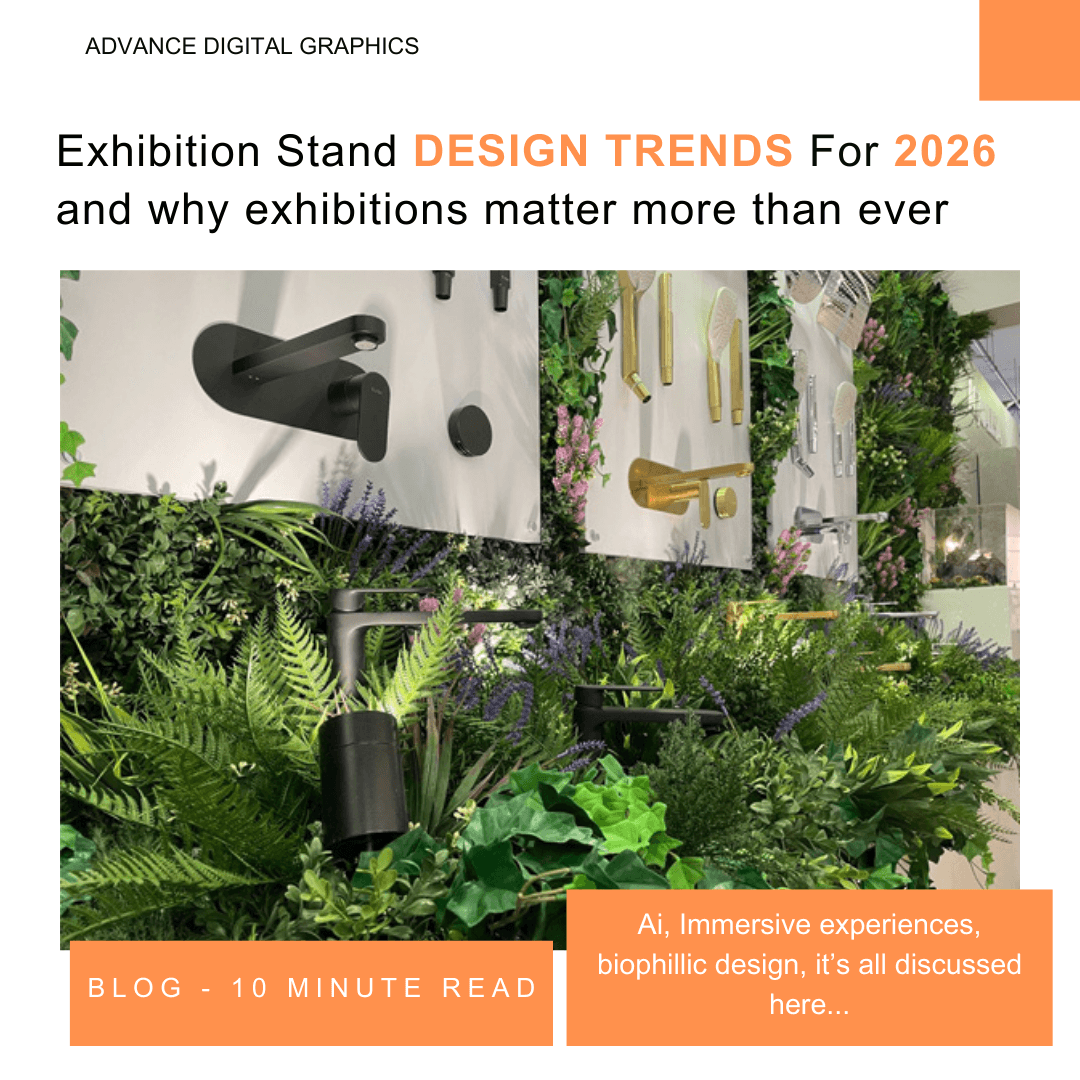
Biophilic design — architecture and environments inspired by nature — is gaining momentum across the built environment, and exhibitions are no exception.
In stand design, biophilia might include natural materials such as wood, real plants, organic textures and softer, more natural lighting. These elements help create inviting spaces where visitors feel relaxed, comfortable and open to conversation.
Why it matters for your business:
Trade shows can be overwhelming. A stand that offers a calm, welcoming environment naturally attracts visitors and encourages them to stay longer. Longer dwell time leads to deeper conversations, stronger connections and more meaningful leads.


4. Immersive Experiences Are Now Expected
Immersive experiences are no longer reserved for large brands or headline events — they are now mainstream. Research shows that over half of audiences who seek immersive experiences in their leisure time are of working age, meaning those same expectations carry over into professional environments.
Exhibition stands that incorporate interactive games, AI-driven content and advancements in experiential tech with the use of AI. For example photo Booths now transform photos into short social-media ready video’s or hands-on digital experiences create moments that visitors remember long after the event ends. These experiences transform a stand from a display into a destination. Why it matters for your business.
Memorable interactions drive brand recall. When visitors actively participate rather than passively observe, they are more likely to remember your brand, share their experience, and convert into qualified leads. In a crowded exhibition hall, immersion is a powerful differentiator.


Sources used for research of this blog include: Great British Business Show, University Of The Built Environment, Immersive Experience Network, The London Business Show.